Bunker Repair

Over the years the bunkers have been replenished with new sand as it has sloughed off of the sides. This has left quite a bit of sand at the bottom of the bunkers. We have been spending the last few weeks pushing the sand back up on to the sides of the bunkers.


As we push the sand back up to the sides of the bunkers it leaves a pretty fluffy surface for a little while. The fluffy sides can lead to a few more plugged balls if they fly into the side of the bunkers. It also leaves for a little more firm bottom since some of the sand is removed and that will go away as week get the bunker rake through these bunkers a few more times.
This process will get the bunkers back to the original look. Sand back onto the sides will make them a little more visible during an approach shot or tee shot. As we work through the summer we are trying to restore many parts of the golf course back to the way it was designed. Over the next few posts I will show some of the other projects that we are doing to help with our summer restoration project.

if you have any questions please feel free to contact me.

Justin Ruiz, CGCS, MG

justinr@indiansummergolf.com


The Club Entrance

The club entrance has been an eye sore since I started in February of last year. Last year we tried to maintain the landscape to the best of our ability, but the landscape has been in disrepair for some time. The euonymus plants were thinned out from irrigation problems that needed to be fixed and weeds that had taken over the landscape.This year we tried our best to get the entrance of the club to pop. We want to be able to catch the attention of our members and their guests as they pull into the club. We did some changes to the islands going up to the club. Adding turf with a mix of flowers has gotten high praise from a lot of the members.

We have now started the main entrance to the club that has been such an eye sore. We have removed all the landscaping near the road and plan to replace this area with the same motif, turf and flowers. This will help increase the curb appeal of the club.

if you have any questions or concerns about the work happening at the entrance feel free to contact me,

Justin Ruiz, CGCS, MG

justinr@indiansummergolf.com


Lake Management

Recently I took the exam for the aquatic pesticide license category to be able to control the aquatic weeds in our lakes. The weeds have gotten out of control over the years and the lakes have lost their luster.

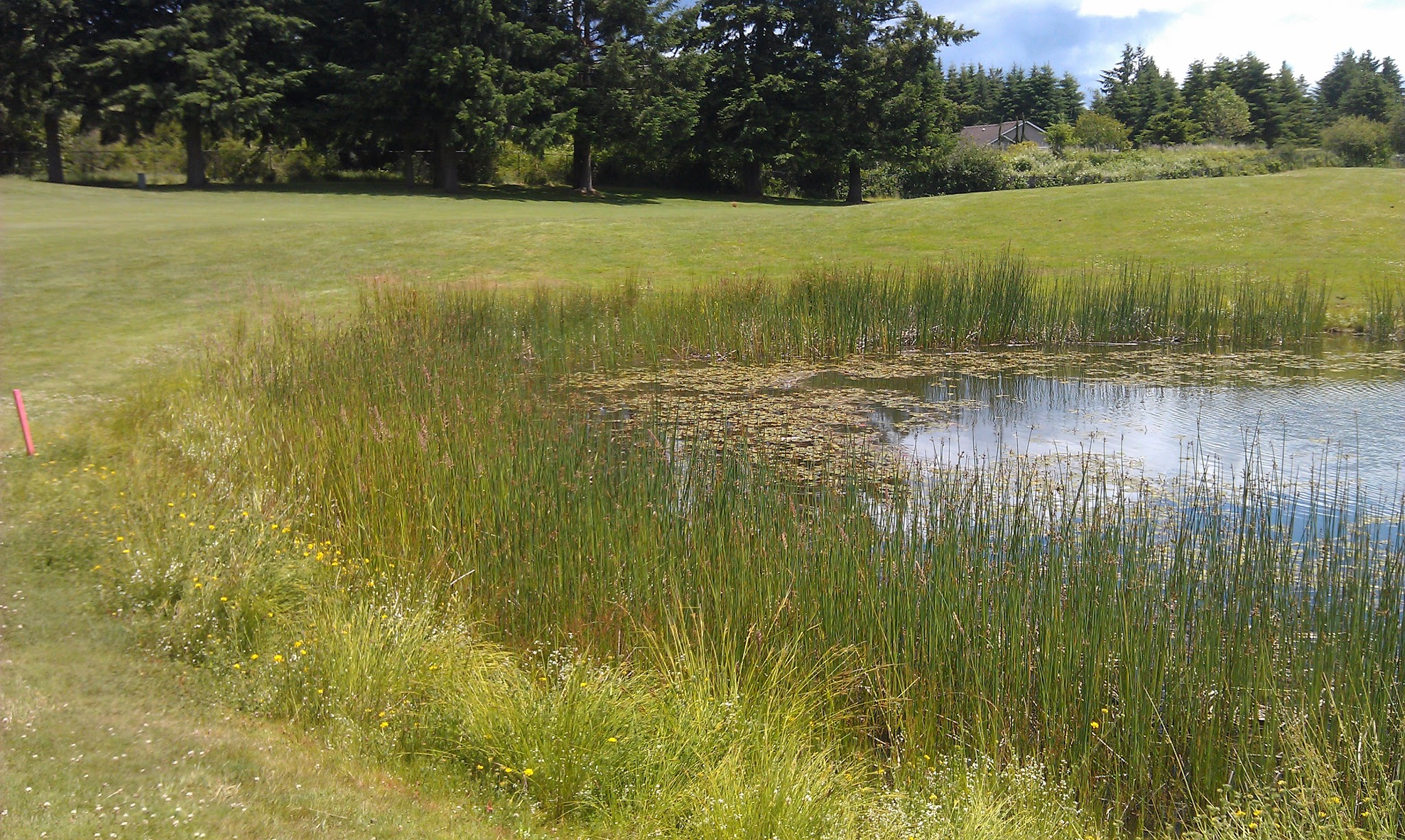
The weeds begin to reduce visibility from a players standpoint. A good example is off the first tee. The lake in the right has become so overgrown that you can no longer see where the lake starts and where the lake ends. My hope is to control the weeds and also bring the lakes back to their original size.

Yes, original size. The size of the lakes have gotten smaller. The lake on 14 is a prime example of how the lake has slowly reduced in size. There is an overflow near the lake that keeps the lake at a certain level. As the banks have encroached into the water, the water level was adjusted to be a little lower. To date the lake is roughly 6" lower than when it was originally constructed. If we can succeed in restoring the banks back to the original height the lake will look completely different. A six inch lift will make the green look like it is that much closer to the water. Another benefit from the restoration will help save time and money. If the bank is not in the water anymore we will be able to get our rough unit around it so we will not have to spend weeks weed eating the longer grass down. It will be saving roughly 350 hours of labor if we can reduce that weedeating job.

If you have any questions or comments please contact me,

Justin Ruiz, CGCS, MG

justinr@indiansummergolf.com


Latest News

Recently I was interviewed by BASFTurf Talk on the challenges that I expect to face this summer and what I do to beat those challenges. If you would like to read the article please click the link.

Guest blogger superintendent Justin Ruiz

If you have any question please contact me,

Justin Ruiz, CGCS, MG

justinr@indiansummergolf.com


Divot Party

The divot repair party was a huge success. The members had a great time on the golf course and helped our staff by filling in all the divots on the fairways and tees.

I have had quite a few members ask me if I prefer that divots are filled with sand or to replace the pelt. It is a great question and I always answer it the same.a I feel that repairing the divot is best done with sand and seed.
 
A divot that has the pelt replaced is prone to failing unless it is a large enough piece of sod to stay in the hole. The fairway mowers will most likely pull the replaced turf out of its hole. The blower will also blow replaced divots out of their hole as well. Sand and seed performs best in both situations.
 
I would also like to address the driving range divots. I have sen a few blog posts from other superintendents showing divot patterns that they have requested at their golf courses for quicker healing. Taking divots in rows or strips will help the grass fill in quicker. Below are a couple of pictures to show you the difference.
 
The top picture show a strip of divots. Then the next strip was started yet leaving some grass between the two strips. This has a much quicker healing time. The bottom picture shows a more traditional pattern. It makes for a long recover time when a large area like this is removed. The grass has a long way to go to get to the middle of that area and seed has less protection from the elements and mowers.
 
If you can please try to take divots in strips this would help with the recovery time and help us utilize our range more efficiently.
 
If you have any questions about the divot party or the range divot patterns please contact me.
 
Justinr@indiansummergolf.com


Tree Backup

One very important tree had a considerable loss. The maple tree in the fairway on number twelve lost a large branch. The branch left a huge wound in the side of the tree. Since this tree is integral to the layout of the hole, I brought in a certified arborist to give us an idea on what we could do to save this tree.

I knew that the loss of that tree would change the hole dramatically. I explained the importance to the arborist and he recommended that we plant a backup tree behind the existing tree and when the tree does indeed fail, we will already have a replacement established.

We decided to install a Sequoia. This is the only Sequoia tree on the golf course. This tree should give the hole some unique character. The tree is currently staked and we recommend that you take free relief if you are around the new tree. It will take a little time for it to adapt to its new environment.

If you have any questions please contact me.

Justin Ruiz, CGCS, MG

justinr@indiansummergolf.com


Check out YouTube Videos

Total Pageviews

Followers

is where my documents live!

Follow JustinRuizCGCS on Twitter
Look inside >
32 33
COVER STORY
Look inside >
14 15
Hole of the Month
Look inside >
31
waterwise PART THREE